
The argument for a “Christian nation” depends on myths and the false narratives of many American history textbooks, as researcher James Loewen has discovered (“Lies My Teacher Told Me, 2018). As time passes these textbooks have corrected the record, but those of us who attended high school in the 1960’s, ’70’s and 80’s have not had the benefit of updated texts. We may be still shackled to the traditions not based on primary resources.
The assertion that the United States is a “Christian nation” has marginalized Muslims as citizens, some Native Americans, as well as believers in eastern religions, such as Buddhism, Ba’Hai and Sikh, not to mention the substantial representation of “Nones” (29%) who do not identify as members of any religion in the Pew Religions Poll [https://www.pewresearch.org/religion/2021/12/14/about-three-in-ten-u-s-adults-are-now-religiously-unaffiliated/].
In some cases this is a deliberate marginalization, because non-Christians are considered less American because of their religions, but in most cases the idea of the “Christian Nation” has been used to eliminate the notion of separation of church and state. Some Christians believe their faith should be represented in aid to public schools, in reciting prayers in public places, or in public celebration of religious holidays.
This is what John Stuart Mill described as “the tyranny of the majority,”and the Bill of Rights was designed to prevent it. Those who staunchly defend their rights under the first ten amendments, sometimes forget the rights of minorities.
The claim that the United States has been a “Christian” nation from the beginning has ignored the settling of the south and southwest long before 1620. The Pilgrims were strict Protestant Christians in the sense that modern conservative Christians define “Christianity,” but a lot of territory was settled in the sixteenth century by the Spanish, long before they arrived.
The first religious group “seeking regions new to them to secure religious liberty” were the Spanish Jews in New Mexico in the late 1500’s. [Loewen, James, “Lies My Teacher Told Me, (2018, p. 71]. Clearly they were not “Christian” by any theological definition, but their persecution in Europe was just as real.
Before the New England Pilgrims existed (1620) the Spanish Catholics arrived, settling in Florida and founding St. Augustine in 1565. The Spanish actually occupied one-third of the territory we know as the United States, from Arkansas to San Francisco, and mostly arrived in the sixteenth century before the Pilgrims [Loewen, p. 71].
The signers of the Declaration of Independence were predominantly Protestants, but also Deists, Quakers, and Unitarians, not always linked with mainline Christian believers. The faith of Deists and Unitarians relied heavily on Enlightenment philosophy, which is distinguished from the more traditional faith of biblical Christians. Religious toleration was commonly held by the signers, but theological purity was never tied to the name of God as used in the Declaration.
As for the doctrine of separation of church and state, most Deists, like Thomas Jefferson, took a strong stand against the state observance of private faiths. As President Jefferson said in a letter to a Baptist group in Danbury, CT.
Believing with you that religion is a matter which lies solely between man and his God, that he owes account to none other for his faith or his worship, that the legislative powers of government reach actions only and not opinions, I contemplate with sovereign reverence that act of the whole American people which declared that their legislature should `make no law respecting an establishment of religion, or prohibiting the free exercise thereof,’ thus building a wall of separation between church and state. https://www.americanprogress.org/article/the-founding-fathers-religious-wisdom/
Similar statements about untangling religion from the state can be found in the writings of James Madison, an Anglican by confession (“Memorial and Remonstrance Against Religious Assessments,” 1785). Madison has been known as the “Father of the Constitution,” which does not mention religion at all, except in the First Amendment.
The honoring of the traditional Christian beliefs of the Massachusetts Bay Colony, the wisdom of the Mayflower Compact, and the influence of Puritan faith in New England have been over-emphasized in the argument for a “Christian”nation. Strictly speaking, only 35 of 102 settlers aboard the Mayflower were “pilgrims.” “. . .the rest were ordinary folk seeking their fortunes in the new Virginia colony,” (Loewen, 81).
That should make us take pause before asserting that the United States is a “Christian nation.”
 [
[ Welcome to the Cabildo, the site of the Louisiana Purchase Transfer ceremonies in 1803 and our State’s most important historical building. Several important historical events took place within the Cabildo and it has been visited by five American Presidents.


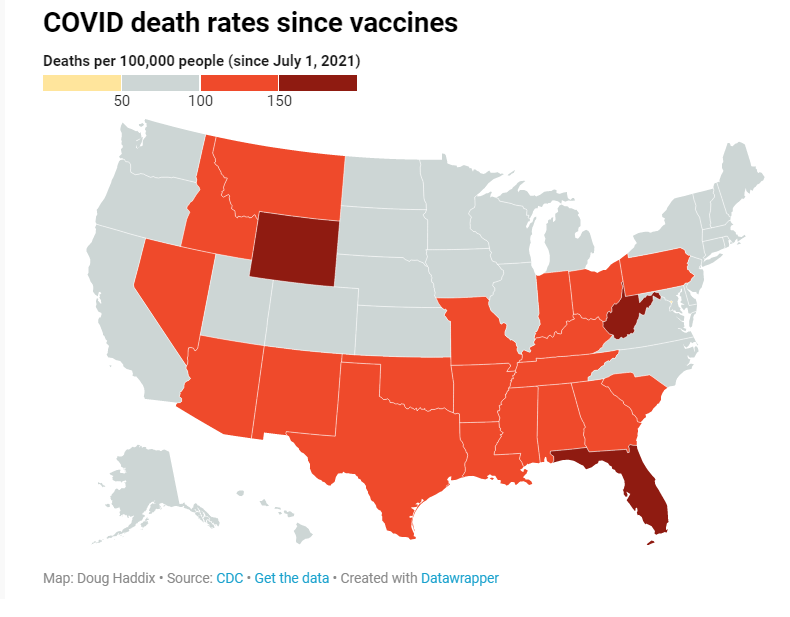 The Post-Dispatch editorial makes some fascinating contrasts between Missouri and Illinois in terms of pandemic prevention, gun control, and highway safety. Without recapitulating their conclusions, it is enough to say that Illinois outshines Missouri for lower rates of mortality in the light of weak CoVid prevention regulations, permissive gun control legislation, and shoddy highway maintenance. These contrasts hold true in the CoVid Map, which links Illinois with other Midwestern states in terms of rate of infection, while Missouri compares more with the Southern states.