But if you was to ask me
How de blues they come to be
Says if you was to ask me
How de blues they come to be–
You wouldn’t need to ask me:
Just look at me and see.
Langston Hughes
After a week in New Orleans right before Mardi Gras, I could not say that Mardi Gras is its greatest gift. Mardi Gras, by its very definition, ends with Ash Wednesday, when we contemplate our mortality. And even though it stretches back to Epiphany in the season we call “Carnival,” it has to end on Ash Wednesday or it is meaningless, just a revel that got out of hand.
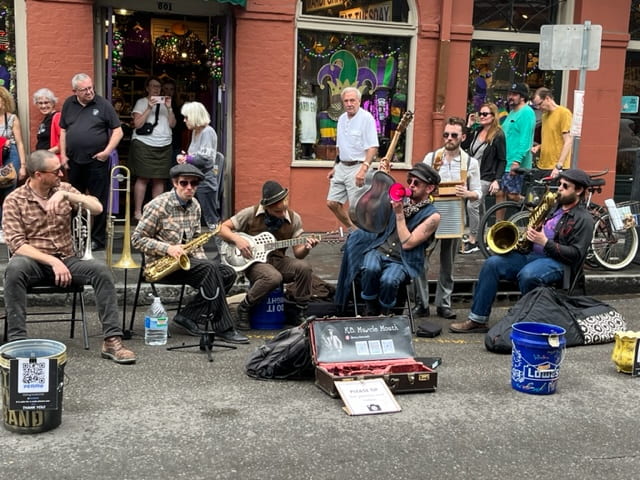
As the frenzy builds in New Orleans before Ash Wednesday, you notice there are people sweeping the streets every hour, people carrying your bags and making your beds, people cooking your meals, and people playing music with open guitar cases in the streets. You have to ask if Mardi Gras would exist without these people, if it is built on their backs.
“Well, they wouldn’t have jobs without Mardi Gras, right?” you say. True enough, but it doesn’t change the imbalance of a celebration that is fabricated with someone’s hard work.
That’s where the Blues comes in. It gives voice to those others, not in a scolding way, but in recognition of burdens they carry to make a celebration last over six weeks. Ralph Ellison said,”The blues is an impulse to keep the painful details and episodes of a brutal experience alive in one’s aching consciousness, to finger its jagged grain, and then transcend it, not by the consolation of philosophy but by squeezing from it, a near tragic, near comic, lyricism” (Blues Poems, 12).
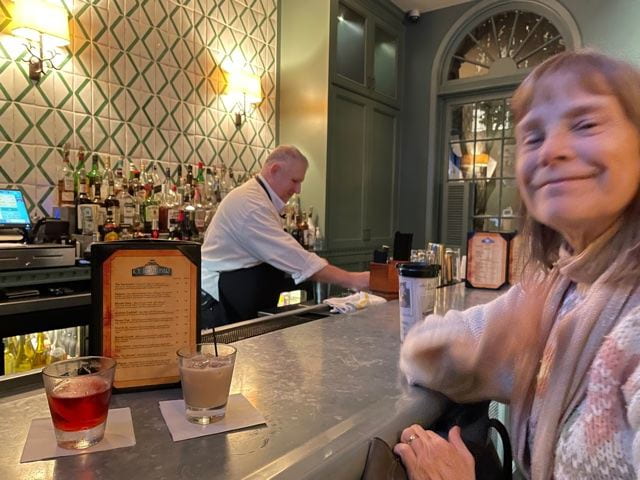
I did not hear the blues so much in New Orleans the week before Mardi Gras. I went to Preservation Hall, I drank in the joints on Frenchmen’s Road, I listened to the bands coming down St. Charles Street. I heard jazz trios and quartets at almost every meal I had. They were all celebrating the spirit of Mardi Gras. There was not much blues, except in the back stories of people working.
Yesterday was Ash Wednesday. You saw dark spots on the foreheads of people all over St. Louis, because they had ashes imposed. We remembered “Dust thou art and to dust thou shalt return.” Not much Mardi Gras in that. We are somber and reflective all of the sudden. Mardi Gras is over with the strike of the clock. It feels a little phony.
The only sound that captures both the sadness and joy of life is the blues. You can play them at Carnival, and you play them on Ash Wednesday, and they still make sense. I didn’t hear them at Carnival, but I wasn’t looking for them. You don’t make a lot of money playing the blues at Carnival. That is not what the tourists come to hear.
They came to hear lively, amazing jazz, and to eat King Cake and Jambalaya, to drink Sazerac and Vieux Carre, to see luminous floats and hear the thumping of high school bands. It was a great show, but it surged on the hard work of others. We didn’t come to New Orleans to see them; they were nearly invisible.
if you was to ask me
How de blues they come to be–
You wouldn’t need to ask me:
Just look at me and see




 Welcome to the Cabildo, the site of the Louisiana Purchase Transfer ceremonies in 1803 and our State’s most important historical building. Several important historical events took place within the Cabildo and it has been visited by five American Presidents.